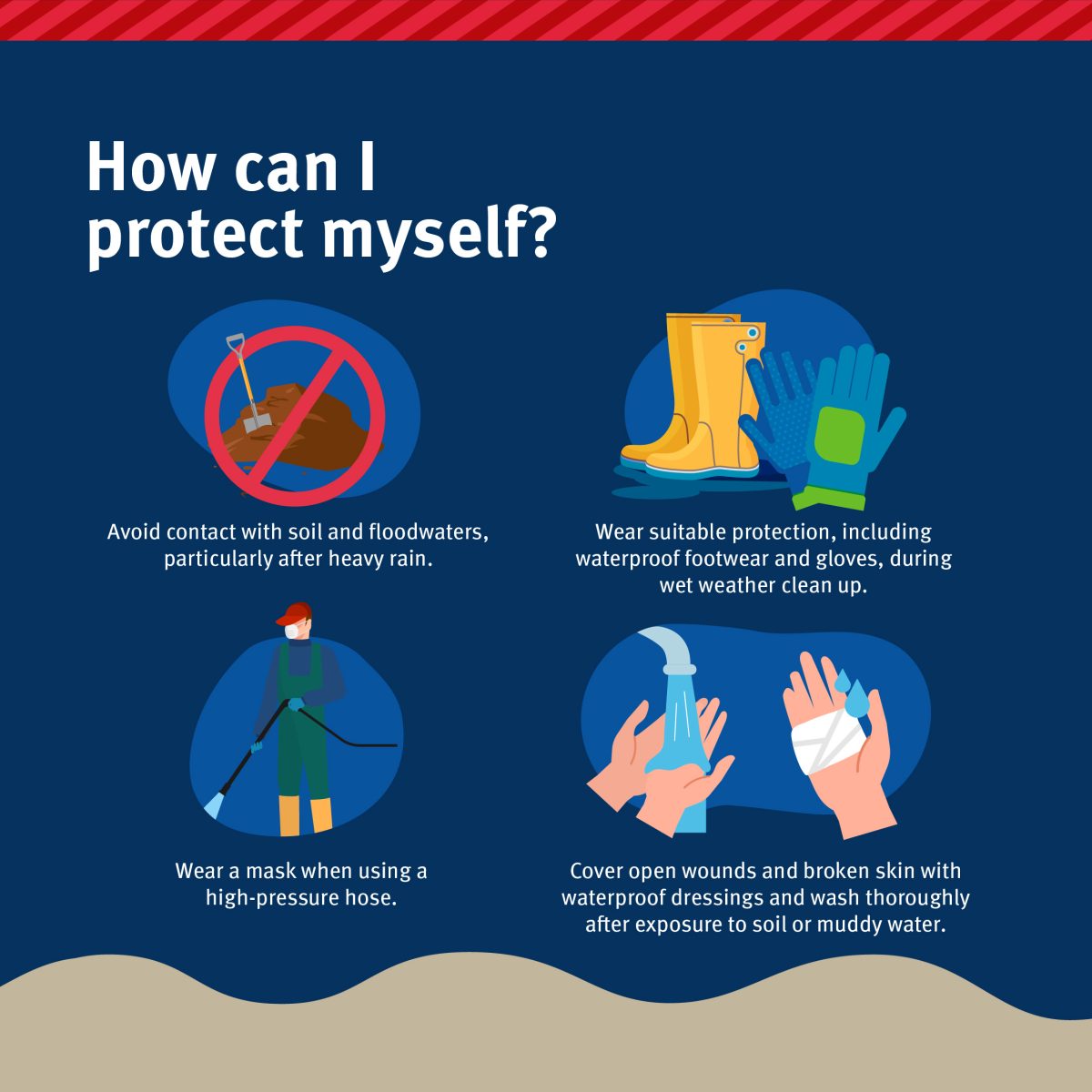
Here are some steps to protect yourself against melioidosis. Image: Queensland Health.
Queensland Health is reminding our residents to take precautions against melioidosis this wet season.
A disease caused by the bacterium Burkholderia pseudomallei found in soil and water in northern Australia and South East Asia, melioidosis cases usually occur after heavy rain and flooding.
The 2024-25 wet season saw the highest number of cases since the disease became notifiable in Queensland in the 1980s.
Up to the start of this summer, 249 cases of melioidosis were reported in Queensland in 2025. Of these, 36 deaths were either directly caused by or associated with the disease.
How can you be infected and how is it transmitted?
Infection can occur by walking through floodwaters or muddy waters with an open cut, or while using a high-pressure hose on muddy surfaces and breathing in contaminated droplets.
Melioidosis does not spread from person to person.
Who is most at risk?
Melioidosis is rare in healthy adults and children; most people exposed to the bacteria do not get sick.
People at highest risk include those with diabetes, cancer, chronic lung or kidney disease, older people and people who drink heavily or binge drink.
The infection can be life threatening and requires prompt medical attention. Almost all (98 per cent) melioidosis cases in 2025 were admitted to hospital, many needing intensive care treatment.
READ ALSO: Cyclone readiness on Rossville agenda
Steps to prevent infection include:
- Avoid contact with soil or muddy water after heavy rain or flooding. Never walk through floodwaters or muddy water in bare feet or thongs. Wear waterproof boots and gloves when working outdoors.
- If you are in an at-risk group, stay inside during heavy downpours.
- Cover cuts, sores or burns with waterproof dressings before working outdoors. Wash skin thoroughly if contact occurs.
- Foot and wound care is important for those with diabetes.
- Consider wearing a mask when using a high-pressure hose or spraying bore water.
What are the symptoms of melioidosis?
Symptoms may include fever, cough and difficulty breathing as a sign of a lung infection (pneumonia).
If not treated quickly, the infection can spread to other areas of the body, causing severe illness including sepsis (blood poisoning) and sometimes death.
Melioidosis can also cause ulcers or skin sores that do not heal.
Symptoms can appear within a few days or weeks after exposure to the bacteria, or sometimes months later.
How is melioidosis treated?
Antibiotics, usually for at least three months. Those who are very unwell often need hospital care and sometimes intensive care.
Seek medical attention urgently if you think you have melioidosis. It can be fatal without prompt antibiotic treatment.
Visit: www.health.qld.gov.au