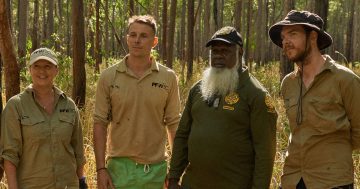
Palm cockatoo expert Dr Christina Zdenek monitors the uptake of artificial hollows built to supplement a critical shortage of breeding habitat for the iconic Cape York bird. Photo: People For Wildlife.
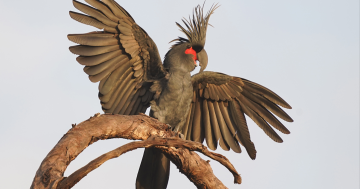
For a bird species relying on centuries-old trees and well-timed cyclones, nesting habitats are hard to come by, but an innovative effort involving artificial homes has marked a hopeful milestone in reversing the decline of the endangered palm cockatoo.
The population of the iconic bird has continued to dwindle in the vast rainforests and savannas of the Cape York Peninsula due to a critical shortage of old tree hollows needed for breeding.
In a world-first conservation triumph, a palm cockatoo chick hatched and fledged from an artificial hollow installed by People for Wildlife (PFW), Apudthama traditional owners and palm cockatoo expert Dr Christina Zdenek, confirming that man-made habitats could successfully supplement the shortage.
Just one month after the team erected the artificial log hollow in the Northern Peninsula area, an adult pair of palm cockatoos laid an egg inside, demonstrating a rapid and unprecedented uptake of the new nesting resource.
“Such immediate use shows the desperate shortage of large natural hollows in the region,” Dr Zdenek said.
The success came after national acclaim for PFW, when it was named a bronze-tier winner of the Australian Geographic Society’s Awards for Nature in October 2025.
The award secured PFW $20,000 for its Breeding Habitat Restoration Project, and since then, the team have installed 29 artificial hollows across northern Cape York.
At the time, PFW executive director Dr Daniel Natusch told Cape York Weekly that palm cockatoo nests required a complex process of 200- to 300-year-old trees being hollowed out by termites and fungi, before needing a cyclone to twist off the top to expose the trunk’s centre.
The process was estimated to take more than 100 years, but with the centre of the tree gone, it became more vulnerable to intense fires and strong winds, making palm cockatoo real estate difficult to maintain and heavily fought over.
Between September and December 2025, PFW’s land management experts monitored the hollow from the ground, complemented by wildlife-friendly remote cameras in the canopy.
The cameras captured nearly 8000 images documenting the birds exploring, entering, and leaving the hollow, providing crucial confirmation of nesting activity.
The monitoring efforts allowed PFW staff to strategically position themselves to capture the final piece of the puzzle — a high-resolution image of the fledgling perched on top of the hollow on its last day before leaving the nest.
“This is truly hard work paying off,” Dr Natusch said.
“It’s a testament to the power of collaboration between traditional owners, scientists, and conservationists to ensure the survival of one of Australia’s most fascinating birds.”

The use of an artificial log hollow just one month after installation showed how desperately the new nesting resource was needed. Photo: People For Wildlife.