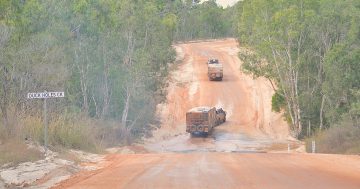
How close is Australia to grinding to a halt? Still a long way, it turns out. Photo: James Coleman.
As oil prices climb, it seems jerry cans have become the new toilet paper – with Bunnings reporting empty shelves in stores across the country.
“We are seeing increased demand for fuel containers in our stores,” a Bunnings spokesperson said.
“Our teams are working hard to ensure product is still available for our customers, with more coming to stores this week.”
Not even a fortnight into the Iranian conflict and it’s clear the panic is setting in for Aussie motorists.
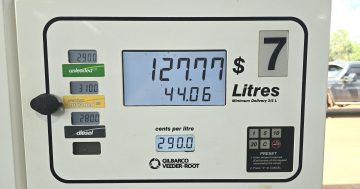
There’s talk of the entire country running out of fuel. Wholesalers are withholding supply to some retailers the same way you might mete out the last slice of a cake. Regional service stations are recording highs of $4 per litre, or – worse – running out of fuel altogether.
But what’s the whole story? And should you really cancel those 34 pre-ordered jerry cans?
We found out.
Okay, give me the bad news. Our fuel reserves are in a bad way, aren’t they?
Yes, relatively. But also no.
Australia is among 90 member countries of the International Energy Agency (IEA). According to its website, “one of the IEA’s core activities is ensuring the security of oil supplies by setting stockholding requirements for member countries”.
The requirement is no fewer than 90 days – except in the cases of Canada, the US and Mexico, which produce enough of their own oil to be exempt.
“IEA member countries are required to ensure oil stock levels equivalent to no less than 90 days of net imports and to be ready to collectively respond to severe supply disruptions affecting the global oil market.”
As of early March, Australia has 36 days of petrol, 32 days of diesel, and 29 days of jet fuel in reserve, according to the Department of Climate Change, Energy, the Environment and Water.
This is nothing new. Australia has failed to meet the IEA’s 90-day mandate since around 2012.
But in 2023, when it was the turn of the Ukraine conflict to put pressure on global oil supply, the Federal Government came up with its own standard, called the ‘Minimum Stockholding Obligation’.
This rule requires fuel companies to maintain minimum supplies in Australia of roughly 1067 million litres of petrol, 663 million litres of jet fuel and 2742 million litres of diesel.

Australia has about 1067 million litres of petrol and 2742 million litres of diesel in reserve. Photo: James Coleman.
There’s more, however. This strategic reserve isn’t for you.
“They’re only to be used by the military or emergency services in the event the tankers stopped coming,” NRMA spokesperson Peter Khoury told Region.
“A country may choose to release some of that reserve to the public if they want, but we certainly don’t think that’s likely.”
He added that “we should really have more”, but also that as long as Australia maintains its supply lines, the situation is safe.
And the good news …?
Yes, actually, there is some.
The problem isn’t really how much oil Iran exports to the world, because it averages between 1.5 and 1.7 million barrels per day, and nearly 90 per cent of that goes exclusively to China.
The bigger problem is that about 20 per cent of the world’s oil consumption must first pass through the Strait of Hormuz, which is currently at the heart of the battle.
Tanker traffic through this sliver of sea between Iran and Oman has dropped away nearly entirely due to threats of bombing from Iran.
Meanwhile, Australia imports about 90 per cent of its refined fuel and crude oil from suppliers in Singapore, South Korea and Japan – plus a few Middle Eastern producers in Saudi Arabia and the UAE.
So while there is definitely roiling in the global market, it’s largely business as usual for our supply lines.
“The tankers are still coming,” Mr Khoury said.
“There is absolutely supply coming through.”
Nonetheless, prices have risen. A lot.
In Canberra, the average price of regular unleaded has jumped to about $2.11 per litre, up from $1.76 on 1 March. The cheapest diesel you’ll find is $2.39.
Some of that is price gouging, to the point that the ACCC has written to the major fuel companies “to set out our expectations about domestic fuel pricing as these international events unfold”.
“The ACCC will not hesitate to take action if representations and market behaviour by a petrol company contravene competition and consumer laws,” Commissioner Anna Brakey added.
But Mr Khoury said these price spikes are driven mainly by the global oil market reacting to the conflict – not by any shortage of fuel in Australia.
The shortage, if any, is local and tied to panic buying.
So I shouldn’t be panicking?
Um, no.
“What we need is for us to go back to our normal buying habits,” Mr Khoury said.
“We need people to stop hoarding and stockpiling. Buy the fuel when you need it.
“If we go back to our standard buying behaviours, then that will relieve the pressure on the supply chain, and hopefully, we won’t have these concerns that we’re having in regional areas in particular.”
Even when it comes to our reserves, we’re still a long way from having to tap into them.
“The oil tankers have never stopped coming in all of Australian history. It’s never happened that we’ve not been able to get oil, even during World War II.”
So you can put the jerry can back on the shelf.
Original Article published by James Coleman on Region Canberra.