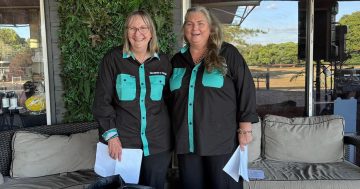
After completing the CORES Suicide Prevention Facilitator Training earlier this month, Muriel and Nick Wymarra will now pass their skills onto Lockhart River community members willing to extend a lifeline. Photo: Supplied.
CONTENT WARNING: This article discusses suicide.
Cape York communities are strengthening their local response to suicide and mental health crises, with community members being trained to recognise warning signs, start difficult conversations and connect people with support.
The work is part of the First Nations Suicide Prevention Pilot, a Queensland Government-funded initiative being delivered across four communities — Lockhart River, Coen, Doomadgee and Mornington Island.
In Lockhart River, the local council has been working with Peak Social Work’s Nick and Muriel Wymarra, who recently completed the CORES Suicide Prevention Facilitator Training, to build community capacity in the mental health space.
“In Aboriginal communities, I think there are natural helpers, and if we can enlist the support of those natural helpers, as in giving them training, including them as part of a responsive system of services and people who genuinely want to give their time to help out, that kind of system works well,” Mr Wymarra said.
He said that involving locals was a key aspect of the program, adding that community members were the ones who could truly understand what their fellow residents were carrying.
“We generally tend to look at suicide and attempts as very much an individual problem, but it’s a social problem,” he said.
“When you start to pick apart people’s stories, the contributing factors to why people do what they do are many and varied, so our part is to help take a step back from that and help people who are in distress.
“The things that cause those stresses or distress in people’s lives are things like extreme isolation during the wet, it might be a family issue, it could be separation.”
The program is a joint collaboration between the Queensland Government, Queensland Mental Health Commission, Northern Queensland Primary Health Network, Life Promotion & Suicide Prevention FNQ, Lockhart River Aboriginal Shire Council and Peak Social Work.
Lockhart River Aboriginal Shire Council initially received the funding to run the pilot program until the end of September, but due to the collaboration, it will continue until 31 January.
“Because of those key organisations, we’re being given more of an opportunity to deliver suicide prevention training to the community on an ongoing basis past the funding date,” Mr Wymarra said.
“It can give people from all walks of life the skills and ability to have a conversation with someone when they’re feeling low. It’s about keeping people alive.
“The goal is community sustainability well past the funding date, so that we’re actually leaving people with skills in their community, which is really important, obviously, in rural and remote areas.”
The program also hopes to encourage the sharing of stories about recovery, strength and resilience.
Rather than focusing on the details of suicide or suicide attempts, organisers say stories about how families coped, found support and recovered can help others recognise that a lifeline is available.
“I think it’s important to be able to promote the idea that there are ways that you can recover, that keeps you safe and people around you safe,” Mr Wymarra said.
“The stories about strength and resilience, about systems or supports that helped, can also spark interest and momentum in terms of attending training, getting skills and building capacity to respond in the future.”
Two more CORES Suicide Prevention Facilitator Training sessions in Lockhart River have now been confirmed for 27 October and 24 November, with future dates to be published on the Lockhart River Aboriginal Shire Council Facebook page.
“The training is free, it takes a day, it’s very simple, and it’s not overly clinical,” he said.
If this story has raised any issues for you, you can contact Lifeline’s 24-hour crisis support line on 13 11 14 or the Suicide Call Back Service on 1300 659 467. In an emergency, call triple zero.