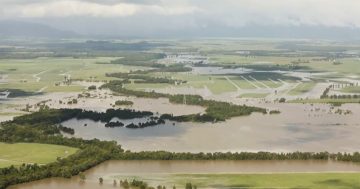
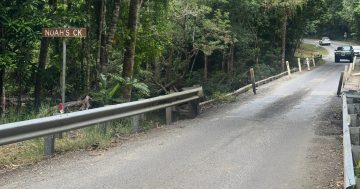
Premier David Crisafulli says confirmation disaster recovery funding changes will not go ahead “diverts disaster for the most disaster-prone state”. Photo: Supplied.
Queensland Premier David Crisafulli and Cook MP David Kempton have welcomed a federal government backdown on proposed disaster recovery funding changes – a big win following strong advocacy from Far North community leaders.
Mr Kempton, Federal Leichhardt MP Matt Smith and council leaders including Cook Shire Mayor Robyn Holmes rallied against the contentious changes which would see states, territories and councils foot up to 50 per cent of the recovery bill following disasters. The Commonwealth currently chips in up to 75 per cent.
Mr Crisafulli thanked Prime Minister Anthony Albanese “for listening to our concerns and arriving at a common-sense decision”.
“We now wait to see further details and ensure this is delivered and funding arrangements are maintained in full, so Queenslanders can have certainty and confidence in their hour of need during disaster season,” he said.
“We stood alongside mayors, the Local Government Association of Queensland and councils across the state and went in to fight for Queenslanders because it was the right thing to do.”
Mr Crisafulli said the decision “diverts disaster for the most disaster-prone state”.
“We look forward to strengthening our preparedness and response ahead of disaster season, in the knowledge that there will be no changes to a formula that has worked for decades,” he said.
Mr Kempton posted a video to social media, pleased to see the “Federal Government has listened to the State Government and every council in Queensland and changed its mind about the alterations to the disaster funding arrangements”.

Cook MP David Kempton. Photo: Facebook.
“From this season and from now on, the old system will apply where the Federal Government pays 75 per cent and the State Government and councils pick up the rest,” he said.
“This is really important so that we have certainty moving forward that when there is a natural disaster people will get the support and the help they need promptly.
“Time and time again, the State Government has to stake its claim against a reckless Albanese Government that seems to have little regard for regional Queensland.”
However, local federal representative Mr Smith was a vocal local advocate and helped have the flagged funding changes dumped, according to Ms Holmes and other community leaders.
He was in Pormpuraaw with Communications Minister Anika Wells when Mr Chalmers informed him the funding changes were canned.
Following the announcement, Mr Smith explained why it was important the changes did not go ahead.
“Nobody has ever said – and it’s been the government’s position always – that councils should not, should never be, responsible for the funding of disaster recovery,” he said.
“What councils do better than anybody else is look after their community. If you want boots on the ground, if you want the people who know the streets, know the bridges, understand the trees when it’s time to clean up, it’s got to be councils. But they do not have the funding to do that. That is why it should always be the responsibility of the feds and the state.
“I’m very pleased with how this has come up and I’m glad that Far Northerners can sleep easy knowing that the Anthony Albanese Labor government stands right beside them through any disaster, as we always have.
“It is completely inappropriate for local councils to try to pay for disaster funding. They are better at doing the jobs. I have been working for council when a cyclone was here, I’ve seen how quickly it can respond and how much love and pride your average council worker has for their community. They’ll move heaven and earth to get their communities back up and running as soon as possible.

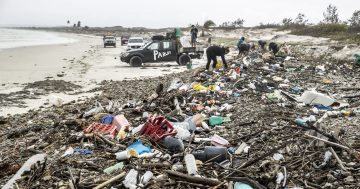
Disaster Relief Australia removes debris as part of widespread cleanup efforts in the Bloomfield area after Tropical Cyclone Jasper. Photo: Supplied.
“The only question was going to be funding. Now we’ve taken that uncertainty away to make sure that councils right across the region and right across the state and right across Australia, know where that funding is coming from, so that when disaster does happen, they can rest assured that when their crews are out there on the ground, it is going to get paid for and we are going to make sure that continues to happen that way.”
Mr Smith was asked whether there were any concerns about red tape and getting funding to smaller councils.
“The efficiency is still built in. So the funding was a separate conversation for the efficiencies that we’re trying to get in there to ensure that our smaller councils are able to efficiently get out there and do the repairs needed … ,” he said.
“Mayor Robyn Holmes up at Cook Shire there was incredibly vocal. And she has 148,000 square kilometres to look after and a rate base of about 4000 people. And she’s been integral as well as (Cairns) Mayor Eden in being a part of these conversations.
“And I just want to shout out all of the mayors in the Far North for their advocacy and for the care and love that they’ve shown their community throughout this process.”
Original Article published by Luke Mortimer on Region Tropical North Queensland.