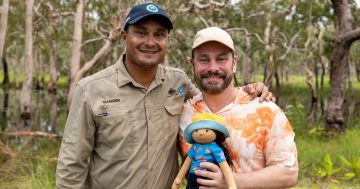
TSRA ranger Lincoln Mau. Non-toxic bait trials and genetic testing of rats have helped traditional owners refine and inform drone baiting project design. Photos: Torres Strait Regional Authority.
Torres Strait traditional owners are ramping up efforts to wipe out ravenous invasive rats on Deliverance Island using drones to help bird populations fight off the deadly H5 bird flu strain.
The project by Maluilgal Registered Native Title Body Corporate (RNTBC) and Torres Strait Regional Authority (TSRA) on the remote island, called Warul Kawa in the Torres Strait dialect, follows a $1.5 million funding injection by the Federal Government.
Warul Kawa is about 800 kilometres north of Cairns and an important habitat for birds taking a rest along the East Asian–Australasian Flyway migratory path, including the Pacific golden plover and iconic little tern. It’s also home to a variety of marine turtles.
Drones are used to drop baits to eradicate rats (makas) and restore important habitats to strengthen the resilience of the migratory and resident seabird populations before bird flu hits.
Non-toxic baits were initially trialled and the drones will now be targeting rats across the island with toxic baits. The destructive rats eat birds and their eggs, turtles and hatchlings, coconuts, seagrass and even plastic marine debris washed ashore.
The uninhabited island will be closed to the community and visitors from 1 November 2026 to 31 January 2027 to facilitate the eradication work.
The work to ward off bird flu comes following 734 confirmed cases of the H5 strain in wildlife as of Tuesday (3 November), according to the Department of Agriculture, Fisheries and Forestry.
Only two cases have been in Queensland – the first involved a dead petrel found on Moreton Island in July and the second involved a dead shearwater found on the Sunshine Coast in August.
TSRA chairperson George Nona said the drone work in the western island cluster followed extensive research, community planning, monitoring and advocacy over more than 15 years.
“Driven by decades of community effort, the Warul Kawa drone operation is Australia’s first major rodent eradication project led by traditional owners,” he said.

One of the invasive rats plaguing Deliverance Island (Warul Kawa).
“This project has been a marathon, not a sprint, with community and local rangers working together over many years to shape the solution and now lead efforts to prepare for H5 bird flu.
“Acting now gives us the best chance to protect our wildlife, culture and environment plus strengthen wildlife’s ability to withstand and recover from the disease if it reaches our shores.
“Zenadth Kes (Torres Strait) is weaving traditional knowledge with science to support more resilient bird populations before H5 bird flu impacts our region.”
Maluilgal RNTBC chairperson Keith Pabai said: “This project has always been about protecting Ngulpun Kawa, our island and culture, for future generations.”
“Traditional owners have carefully considered potential impacts and ensured decisions have been guided by cultural and spiritual values every step of the way,” he said.
“This drone work led by traditional owners is a critical step towards protecting one of the most culturally and environmentally significant islands not only in Zenadth Kes (Torres Strait), but all of Australia.”
TSRA land team assistant director Simon Tedder said years of preparation included grassroots planning and monitoring involving the community, rangers, project partners and technical specialists.

TSRA ranger Stephen Foster.
“This First Nations-led approach is weaving traditional knowledge with science to ensure this work is culturally appropriate, scientifically robust and gives Warul Kawa the best opportunity for long-term resilience and recovery,” he said.
Warul Kawa is culturally significant including to the people of Boigu, Dauan, Saibai, Badu and Mabuiag and forms part of the Ugul Malu Kawa Indigenous Protected Area (IPA).
The project involves TSRA’s Environmental Management Program and TSRA’s Land and Sea Management Unit. The unit includes local rangers, scientists and other experts guided by the culture and Ailan Kastom (island custom) of traditional owners.
Authorities have warned the public should not touch sick, injured or dead birds. Report groups of sick or dead birds or other animals to the Emergency Animal Disease Hotline on 1800 675 888.
The department has more information about H5 bird flu online.

Birds on Deliverance Island (Warul Kawa). Photo: TSRA.