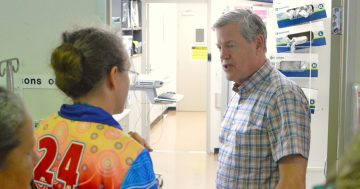
Cairns infectious diseases specialist Dr Josh Hanson, melioidosis study participant William Misi and infectious diseases specialist Dr Simon Smith. Photo: Cairns and Hinterland Hospital and Health Service.
Far North infectious disease experts are leading the charge on research into a deadly tropical infection – and have warned residents of increased risk as the wet season nears.
Cairns Hospital’s Dr Simon Smith and a team of clinicians and researchers from Cairns and Hinterland Hospital and Health Service (CHHHS) have published a study looking at medication used to treat people who contract melioidosis.
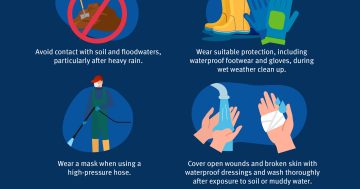
Melioidosis is a bacterial infection spread through contact with contaminated soil, air or water. The infection occurs in tropical areas like Far North Queensland, typically during the wet season from about December to April.
There have been 39 confirmed cases of melioidosis in the Cairns and Hinterland region so far this year, with an annual average of about 53 cases. Torres and Cape Hospital and Health Service has recorded 13 cases this year and records about eight on average.
Some patients have needed to be admitted to intensive care units, and “tragically a small number have died”, CHHHS said.
Dr Smith said the study was about giving melioidosis patients longer courses of intravenous antibiotics and cutting down on oral medications used. The oral medications can cause serious side effects.
“Anyone who contracts melioidosis requires both types of antibiotics to ensure the infection doesn’t return,” Dr Smith said.

The Burkholderia pseudomallei bacteria which causes melioidosis, a rare infection, is linked to soil in northern Australia. Photo: Lajst.
“Unfortunately around 50 per cent of patients suffer side effects from the oral medication and most of them need to stop using them, which increases their risk of re-infection.
“With the wet season approaching, we know we will likely see an increase in cases and this type of research is crucial to ensuring patients receive the best care possible.”
White Rock support worker William Misi, 40, became sick with melioidosis last year and joined Dr Smith’s study, which is the first national randomised control trial involving the infection.
Mr Misi said he thought he had “man flu” for several weeks before he deteriorated and was brought to hospital in an ambulance suffering from hallucinations and sharp pains in his liver.
“I thought someone had hit me with a pole,” he said.
“I wasn’t able to move and my wife told me afterwards that I said to her, ‘Let me sit here for five minutes before I die’.
“I take my hat off to Dr Smith and his team, they were right there to answer all my questions. The hospital staff were amazing.”
Mr Misi received a long course of intravenous antibiotics as part of the study and after eight days in hospital he was treated at home for almost two months through the Hospital in the Home program.
His infection was cured and did not return, without him having to take the long course of oral antibiotics.
Mr Misi said he was aware of two more residents in his neighbourhood block who had also contracted the infection. He suffers some ongoing liver pain, but is gradually recovering.
A spate of melioidosis cases have been identified in the southern suburbs of Cairns – “possibly being linked to urban expansion being undertaken”, the health service said.
Symptoms may include fever, coughing and difficulty breathing (due to possible lung infections), according to Queensland Health. If not treated quickly, melioidosis can spread to other areas of the body, causing illnesses such as sepsis and sometimes leading to death.
Original Article published by Luke Mortimer on Region Tropical North Queensland.