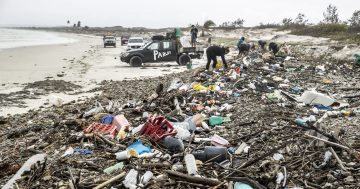
Marine debris left on the eastern side of Cape York after Tropical Cyclone Jasper. Photo: Supplied.
Far North Queensland mayors including Cook Shire’s Robyn Holmes and Wujal Wujal’s Alister Gibson have joined a state-wide charge for the Federal Government to properly support boots-on-the-ground disaster preparation and recovery.
The Local Government Association of Queensland (LGAQ) – which includes all the state’s mayors – has pointed to the liquidation of Disaster Relief Australia (DRA) and a gap left in recovery arrangements, leaving communities exposed.
DRA was “increasingly used in place of Australian Defence Force (ADF) personnel to assist with disaster clean-ups”.
Now, councils and communities have been left wondering who will help when it comes to future recovery efforts considering the ADF alternative has been wound up and workers have been stood down, according to LGAQ CEO Alison Smith.
“This is not a criticism of the volunteers and the hard work they did. But the DRA’s liquidation shows the risks of trying to cut corners when it comes to disaster response and recovery,” she said.
“The best result would be for the Federal Government to maintain the current Disaster Recovery Funding Arrangements (DRFA) funding as well as commit to boots on the ground after severe natural disasters.”
DRA, which was named 2023 Charity of the Year and received $38 million in federal funding, harnessed the skills of veteran volunteers to help communities prepare and recover from disastrous events such as floods and cyclones.
Queensland council representatives have been in Canberra lobbying for a continuation of Disaster Recovery Funding Arrangements (DRFA) funding.
Ms Holmes said Cook Shire Council and the community used DRA following significant events such as Tropical Cyclone Jasper.

Cook Shire Council Mayor Robyn Holmes suggests the Federal Government could simply hand over funding to councils for disaster management. Photo: Supplied.
“If we can’t have the ADF and DRA no longer exists, then who will we turn to when our communities need extra help? And how will we pay for it?” she said.
“Maybe the Federal Government could give local councils the $38 million instead.”
Mr Gibson said Wujal Wujal was evacuated after Jasper and relied heavily on DRA and ADF support.
“What we’re hearing about disaster support is simply getting worse and worse,” he said.
“The federal funding cuts proposed will impact councils and communities dramatically.
“To no longer have guaranteed external physical support when a major disaster event has occurred will create a huge capability issue for us.
“In an extremely remote location like ours, this will be a devastating outcome as there’s really no-one else to rely on when our roads need extensive repairs and our communities are isolated.

Wujal Wujal Mayor Alister Gibson says reducing support for councils would be a “devastating outcome”.
“If it’s not the ADF or DRA, then who?
“The proposed federal disaster funding cut will have a big impact on a community like Wujal Wujal, which regularly has small, sharp weather events that create significant road repair works, resupply costs and isolation.
“But the threshold changes will now mean our small community are on our own.”
LGAQ President Matt Burnett said previous “disaster response arrangements have repeatedly proven their worth and should be funded to continue, not cut back”.
“Up until now, the Federal and State governments and councils have worked in partnership, using the hard lessons of repeated, protracted disasters to forge a preparedness, recovery and betterment system that gives communities the confidence they will get the help they need when they need it,” he said.
Original Article published by Luke Mortimer on Region Tropical North Queensland.