Torres and Cape Hospital and Health Service will screen children who are most at risk in coming days. Photo: Rizki Alpio.
Torres and Cape Hospital and Health Service (TCHHS) is working to stop an outbreak of the contagious streptococcal A bacterial skin infection spreading in a northern Cape community.
Acute post-streptococcal glomerulonephritis (APSGN) results from streptococcal A skin and throat infections and can lead to chronic kidney disease if left untreated.
The disease has been eliminated in most of the country, but TCCHS revealed on Thursday (15 October) that four APSGN skin infection cases had been detected in the Injinoo community in the Northern Peninsula Area (NPA).
APSGN kidney inflammation is “an indicator of social disadvantage, poverty, remoteness and household overcrowding”, according to Queensland Health.
TCHHS public health medical officer Dr Allison Hempenstall said screening would be undertaken from Monday (19 October) to manage the outbreak.
Screening will focus on children aged between 12 months and 16, who are most at risk of APSGN. There is an estimated 270 people in that age range in the community.
Any children found to have skin sores or sore throats will be offered a course of antibiotics to prevent them developing APSGN.
Screening will be carried out by TCHHS workers, including staff from Bamaga Primary Health Care Centre and Northern Peninsula Area Family and Community Services.
“Cases of APSGN are detected across Cape York, the Torres Strait and Northern Peninsula area from time to time,” Dr Hempenstall said.
“The prevalence of APSGN is closely tied to many social determinants of health, including childhood disadvantage and household overcrowding.
“The prevention of APSGN must be targeted at addressing underlying causes, which are beyond just clinical and go to broader social determinants of health.
“From a clinical perspective, our health service responds quickly to individual cases as well as outbreaks of APSGN as soon as these arise. We do this through clinical management with specialist consultation, contact tracing, screening and education for close contacts, and the formation of an outbreak response team if required.”

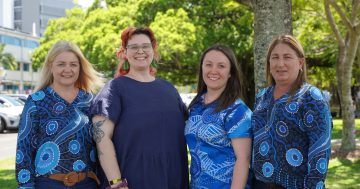
Dr Alison Hempenstall. Photo: TCHHS.
APSGN symptoms include skin sores, a sore throat, a puffy face and limbs, an itch from scabies, and sometimes reddish to dark urine.
“When an APSGN outbreak is identified, and to minimise the spread of the infection, we immediately begin screening in the affected community to check children for the skin sores and sore throats which may go on to cause APSGN,” Dr Hempenstall said.
“As well as monitoring for cases of APSGN and other skin health and kidney-related conditions, our clinical staff deliver a range of education and awareness programs about skin health and kidney health right across our region through our primary health care centres, our public health unit and our Maternal, Child and Family Health services.”
Since the start of the year to 11 October, a total of 15 cases of APSGN were recorded across the TCHHS coverage area.
Previous outbreaks of APSGN occurred in the Northern Peninsula Area in February 2024. On the south of the Cape, outbreaks occurred in 2019 through to 2021. In the Torres Strait, outbreaks occurred on Thursday Island in late 2023 and in 2013, and on Saibai Island in 2013.
APSGN became a notifiable condition in Queensland in October 2023.
Precautions to prevent skin infections and APSGN kidney complications in children include prompt first aid for minor injuries, as well as regular washing or swimming.
Other prevention measures include proper hygiene, such as washing the hands and body with soap, sleeping in a clean bed, washing sheets and towels regularly and wearing clean clothes every day. Residents should also keep a clean home and yard and dispose of garbage properly, the health service advised.
Children must be helped to use soap and wash properly and caregivers should regularly check for skin sores and possible scabies. Any child with sores should be taken to a local health centre.