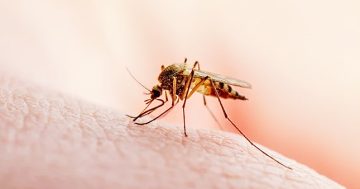
Five new probable local malaria cases have been reported on Saibai Island in the Torres Strait. Photo: Supplied.
Health authorities have revealed five people on Saibai Island in the Torres Strait have likely contracted malaria locally.
Queensland Health states several hundred imported cases are recorded in the state each year, but Australia was certified as malaria-free by the World Health Organization (WHO) in 1981 due to a lack of local cases.
Torres and Cape Hospital and Health Service (TCHHS) confirmed the five probable locally acquired cases of the severe mosquito-borne disease on Wednesday (15 April).
Queensland Health’s Guidelines for Public Health Units states the “re-establishment of malaria and local transmission in Australia could still potentially occur if imported cases travel to locations where suitable mosquito vectors (Anopheles species) are present”.
“Occasionally, limited transmission occurs in the Torres Strait Islands following importation from PNG (Papua New Guinea),” the guidelines read.
“Locally acquired malaria has occurred on the outer islands of the Torres Strait including Saibai, Boigu, Erub and Badu islands.
“The last cases acquired on mainland Australia were during an outbreak in north Queensland in 2002 (at Noah Beach in the Daintree). Notably, a likely case of ‘airport malaria’ (acquired from an infected mosquito imported in an aircraft) has been reported in north Queensland in 1997.”

Saibai is only four kilometres from the PNG mainland. Photo: Torres Strait Island Regional Council.
WHO currently lists Australia as having a certification of malaria elimination.
“Countries that have achieved at least three consecutive years of zero indigenous cases are eligible to apply for a WHO certification of malaria-free status,” the WHO website states.
Authorities have been managing the Saibai cases and public-facing health workers were visiting the island to provide information to residents about mosquito-borne diseases and how to minimise the risk of infection.
Saibai is just four kilometres from the mainland of Papua New Guinea.
“The Saibai cases are being managed appropriately and no further details can be provided due to confidentiality,” TCHHS said in a statement.
The malaria cases are the first reported in the health service this year, while nine were reported last year – three on Cape York and the remainder in the Torres Strait. No cases were reported in 2024 and five were reported in 2023, according to Queensland Health data.
TCHHS public health medical officer Helen Pedgrift said her team had been working with Torres Strait Island Regional Council representatives to check for more malaria cases and carry out mosquito control measures, including spraying.

TCHHS public health medical officer Helen Pedgrift. Photo: Supplied.
She said the community should not be alarmed and be aware that malaria is treatable. Malaria cannot be spread by contact between people.
Malaria is caused by a parasite spread through the bite of some types of mosquitoes.
Dr Pedgrift said Torres Strait residents should watch out for malaria symptoms and take measures to avoid being bitten.
Common symptoms of malaria are high fever, headache, backache, nausea, vomiting, and muscle and joint pains.
Dr Pedgrift urged anyone exhibiting symptoms to visit their local primary health care centre.
TCHHS advised effective drugs were available to treat malaria and should be used early. Late stage, severe, or complicated cases can be fatal.
Anyone travelling to areas where malaria is present should take precautions, including taking appropriate medication to prevent infection.
But it’s best to avoid being bitten at all:
- Wear light-coloured clothing (long-sleeved shirts and long pants to cover exposed skin)
- Use insect repellent containing DEET (di-ethyl toluamide), picaridin or oil of lemon eucalyptus to exposed skin. DEET and picaridin are safe for use by pregnant women. Repellents usually only protect against mosquito bites for up to four hours
- Use other mosquito protection devices such as electric zappers and coils
- Install insect screens and ensure they are in good working order. Alternatively, sleep under a mosquito net.
For more information about malaria visit the Queensland Health website.