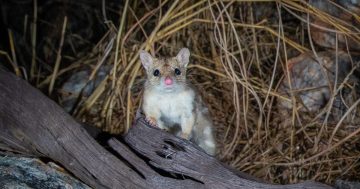
A female northern quoll. Photo: Colossal Biosciences.
An American biotechnology and genetic engineering company working to “de-extinct” the woolly mammoth, Tasmanian tiger (thylacine) and other animals wants to create cane toad-resistant northern quolls in the next three years and release them in Cape York.
Colossal Biosciences states it’s using “cutting-edge genetic and reproductive technologies” with the goal to “introduce toad-resistant traits into vulnerable populations”.
The company believes the project will give the quolls “a fighting chance to survive and recover in landscapes where cane toads are now permanently established”.
Australia has the worst marsupial and mammal extinction rate globally and the northern quoll is listed as endangered under the Environment Protection and Biodiversity Conservation Act.
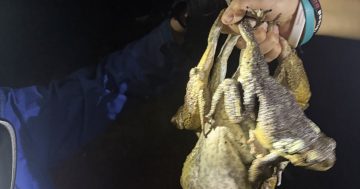
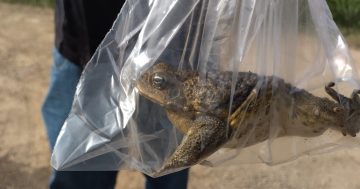
Asked about the unusual endeavour, Colossal Biosciences chief biology officer Professor Andrew Pask explained: “Quolls are dying from cane toad poisoning – unfortunately, our native animals don’t have natural resistance to the introduced cane toad, but where cane toads naturally exist in South America, a lot of the animals are resistant – having evolved alongside cane toads for hundreds of thousands of years.
“We examined what it was that makes those animals resistant and it turns out it is just a single difference (1 base out of 3 billion) in their genetic code,” he said.
“We have made this edit in northern quoll cells and shown that it makes them completely resistant to the toxin.
“We are now working on turning those cells into a living whole animal using new reproductive technologies for marsupials developed at Colossal Australia.”
The company, which has attracted both praise and pointed criticism for its de-extinction work, plans to introduce the quolls in the Northern Territory, Western Australia and Queensland, including the Cape.
“We are partnering with Northern Territories Wildlife Park to perform the work on quolls. The idea would then be to introduce these quolls into the wild,” Prof Pask said.

Image: Colossal Biosciences.
“It’s important to note that if the quoll could survive another 10,000 to 100,000 years alongside the cane toad, it would likely naturally evolve this resistance change on its own, but unfortunately, we don’t have that long – they are going extinct too rapidly.
“We are speeding up the evolution process to give our native animals a fighting chance against this invasive pest.”
The company has also been working on conservation initiatives involving Australian birds and amphibians.
On its website, Colossal states it combines “the science of genetics with the business of discovery” and endeavours “to jumpstart nature’s ancestral heartbeat”.
“To see the woolly mammoth thunder upon tundra once again. To advance the economies of biology and healing through genetics. To make humanity more human. And to reawaken the lost wilds of Earth. So we, and our planet, can breathe easier,” the website reads.
The company has not yet decided where specifically the cane toad-resistant quolls would be released on the Cape.