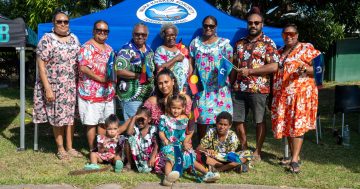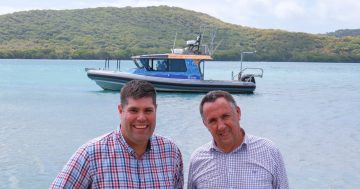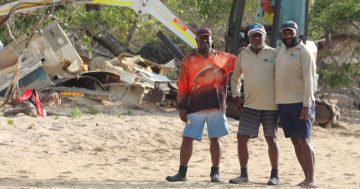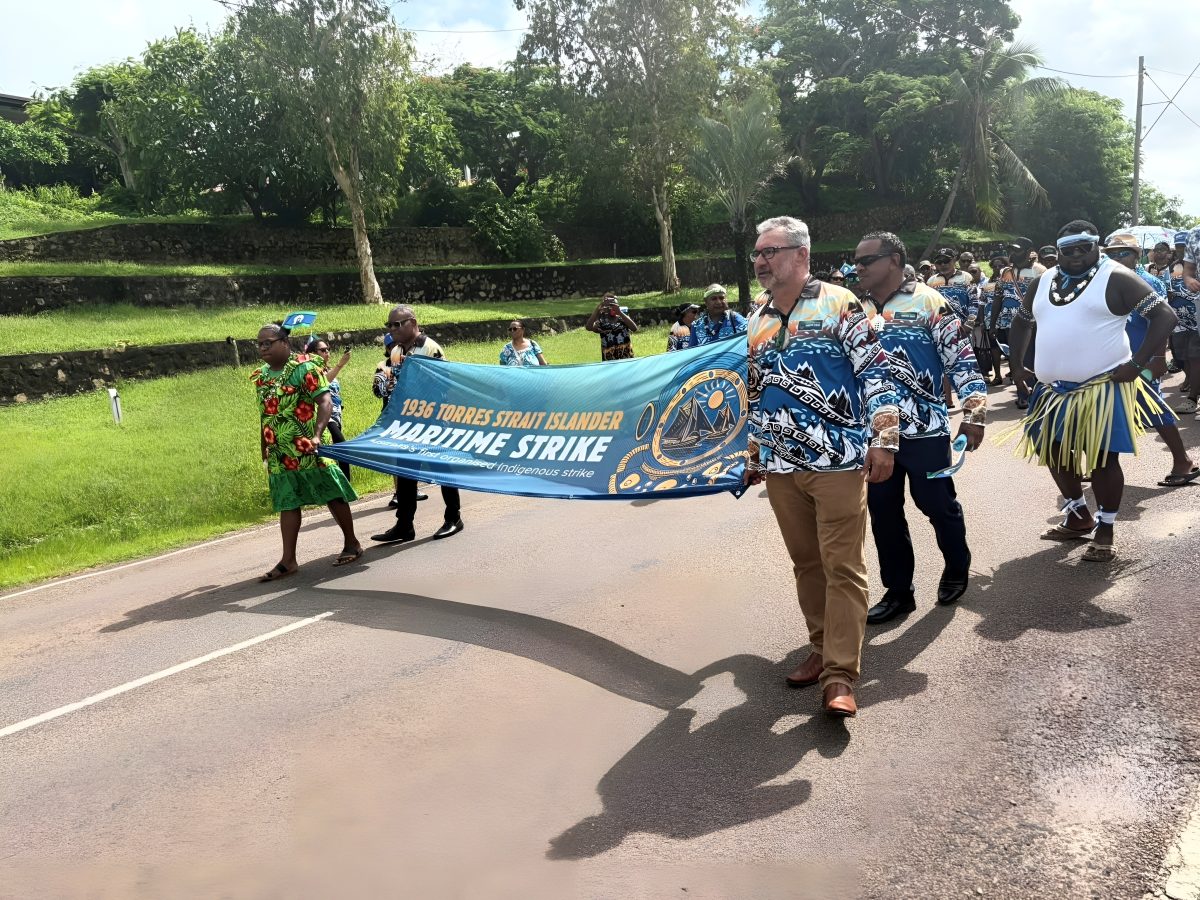
The Torres Strait Maritime Strike 90th anniversary commemoration brought recognition to the pearlers who took a stand against appalling wages and working conditions in 1936. Photo: Supplied.
It was a showcase of bravery that changed the nation forever.
Nine decades ago, Torres Strait Islander workers in the pearl shell industry took a stance against years of racist and restrictive conditions by government officials, leading to the historic 1936 Maritime Strike.
It was the first maritime strike in the country to be led by First Nations people, leading to many more fights against injustices, but it has not always received the recognition it deserved.
Ninety years later, the Torres Strait marked the milestone anniversary from 12-16 January with a series of public events organised by Gur A Baradharaw Kod Torres Strait Sea and Land Council (GBK), bringing an air of celebration to Waiben (Thursday Island).
The main proceedings took place on Wednesday 14 January, with a march and commemorative events officiated by Governor-General of Australia Sam Mostyn AC.
GBK Chair Ned David said the maritime strike was historically overshadowed by the 1937 Masig Conference, a meeting of Torres Strait Islander leaders which led to calls for self-determination and laid the groundwork for future regional governance.
“We’ve never really celebrated the event, because sadly, we’ve focused on that particular meeting in 1937, which is an important part of our history, but this is what made all of that possible,” he said.
“This piece of history got lost; this significant event was talked about, but not celebrated the way it should have been.
“A number of us made speeches today (Wednesday), and we all said the same thing: it’s taken us 89 years to celebrate this occasion, we can’t ignore this anymore, and it needs to be recognised, respected and observed as a critical moment in our history.”
It was years of enduring exploitative labour conditions, racism and government control as the price of survival before it came to a boiling point.
By the early 1930s, the Queensland Government appointed so-called “protectors”, who legally controlled boats built, operated and owned by Torres Strait Islander people.
Many of the workers were also not paid wages, instead being paid in credit they had to spend in specific stores chosen by the government.
In the lead-up to the strike, protector JD McLean had introduced even more restrictions, including a curfew at night, deciding who would crew each boat, and meddling with the personal finances of Torres Strait Islander pearlers.
In January 1936, while McLean was on a recruitment tour of the islands, pearlers took a stand and refused to work on the boats, even as police started making arrests. At least 30 strikers were imprisoned.
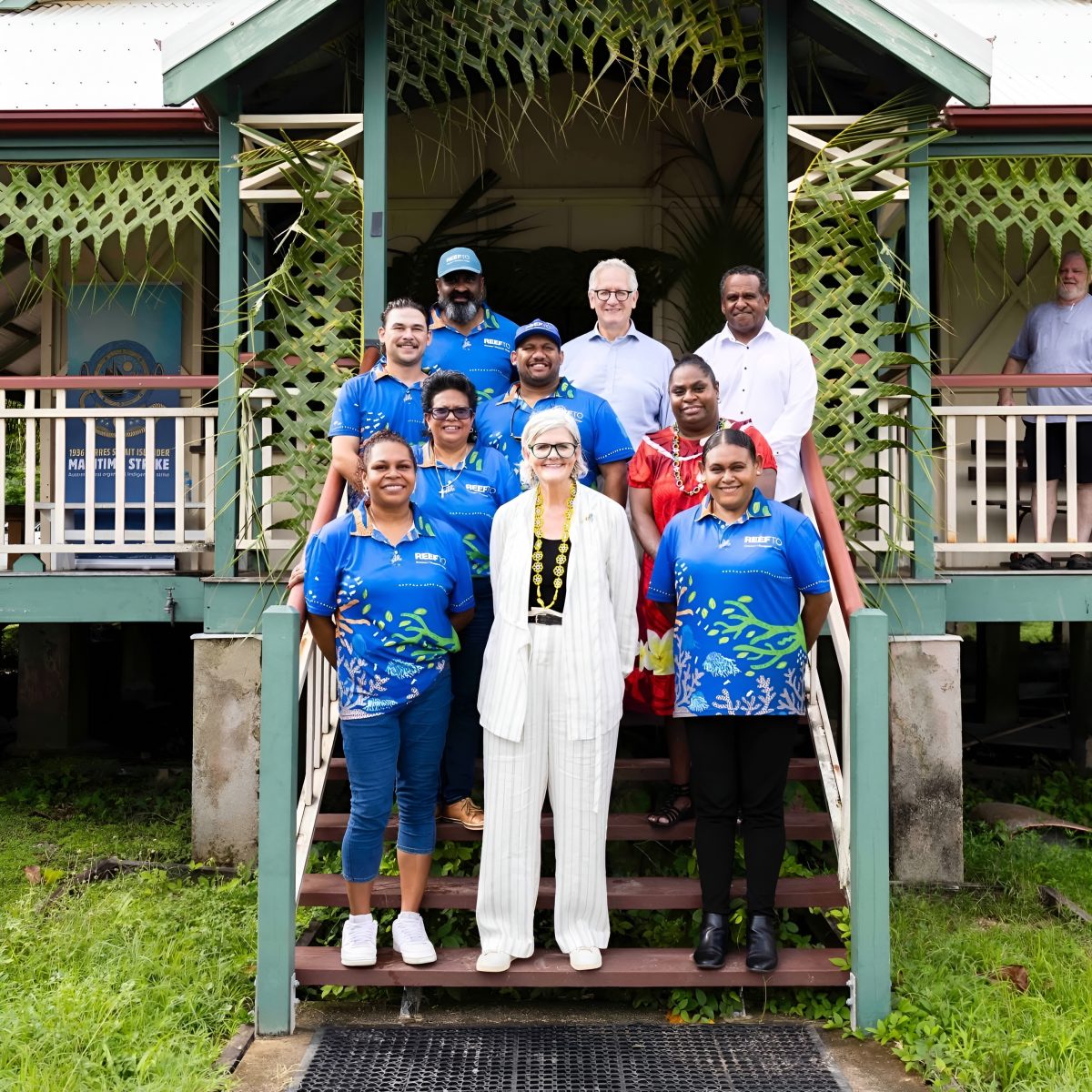
Governor-General of Australia Sam Mostyn AC was present at the momentous occasion in a celebration of Australian history. Photo: Facebook (Governor-General of Australia).
Mr David said he was overwhelmed by the support, with the commemoration hosting people from across the country.
Surprisingly, in the middle of wet season, the sun shone brightly for the celebration — a sign he took as a blessing from ancestors.
“The weather hasn’t been all that friendly for us, but funny enough, today was perfect,” he said.
“It rained here and there, but the sun was out; I think a couple of the people who spoke said it feels like we’re doing the right thing, and it’s our ancestors ensuring the weather didn’t interrupt too much.”
Member for Leichhardt Matt Smith attended the occasion in memory of Australia’s first all-Indigenous strike.
“The Torres Strait Island community, both in Cairns and across the Cape, has given quite a lot in terms of culture, so to be able to come up and celebrate what is such a momentous achievement for this particular part of Australia is a very important part of the job,” he said.
“There is a direct line from the strike in 1936 to the Masig Conference a year later, to Mabo, to the Voice from the Deep (The Masig Statement – Malungu Yangu Wakay).
“It really is the start of Torres Strait Islanders stamping their claim on their identity with the rest of Australia.”